
Divorce and Property: How to Maximise Your Home's Value Before Selling

Selling the family home during a divorce is one of the most financially significant decisions both parties will make. A well-executed pre-sale renovation consistently delivers a higher sale price — and Renosell's pay-at-settlement model removes the most common point of conflict: who funds the renovation upfront.
What Happens When the Family Home Needs to Be Sold During a Separation?
Selling a property during separation or divorce is rarely straightforward. There are legal processes, emotional pressures, and often significant disagreement about timing and strategy. When both parties have a financial stake in the outcome, every decision — including whether to renovate before selling — can become a negotiation point.
This article is written for both parties equally. It is not about taking sides. It is about one practical question: is renovating before selling likely to produce a better financial outcome for both parties, and if so, how do you do it without adding more complexity to an already difficult situation?
Important: This article covers the renovation and property preparation side of selling during a divorce. It does not constitute legal or financial advice. The legal division of property, the timing of a sale, and how proceeds are distributed are matters for your solicitor or family law adviser. Always seek independent legal advice before making decisions about jointly owned property.
If you are already working with a solicitor or a family law financial adviser, this article is a useful briefing on the renovation option. Renosell is experienced in working alongside active legal processes — the renovation timeline can be aligned to suit the legal process rather than the other way around.
Why Does Renovating Before Selling Make Financial Sense for Both Parties?
When a jointly owned property is sold during a divorce, both parties share the proceeds — usually in proportions determined by a binding financial agreement, consent orders, or a court order. That means both parties share the upside of a higher sale price, and both bear the cost of a lower one.
A well-presented property attracts more buyers, generates more competition at auction, and consistently produces a higher final sale price than the same property sold as-is. In Sydney's auction market, competition among buyers is the primary driver of price — and presentation directly affects how many buyers qualify the property and how confidently they bid.
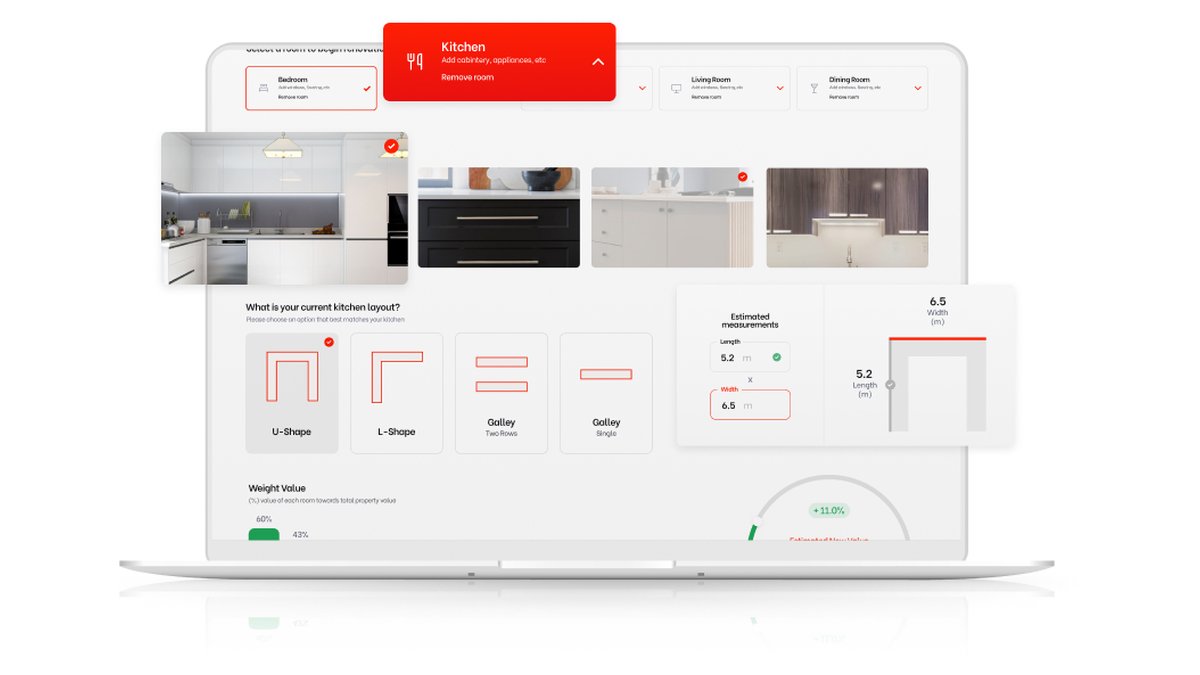
The arithmetic is usually clear. A renovation that costs $45,000 and adds $90,000 to the final sale price delivers $45,000 more to be split. Even in a 60/40 split, both parties receive more than they would have from the unrenovated sale. Use the Renocalc to model this for your specific property before committing to any course of action.
Properties sold during divorce proceedings are also sometimes perceived by buyers as motivated sales — which can attract lower opening bids if the property is not well-presented. A renovated property signals confidence and commands a different type of buyer response.
What Renovations Make the Most Sense When Selling During a Divorce?
The goal in this context is specific: maximise the sale price with the minimum level of decision-making required from both parties. That means targeting cosmetic renovations with clear ROI and broad buyer appeal — not a full renovation that requires dozens of joint design decisions.
- Fresh paint in a neutral palette: A single agreed decision (neutral grey or warm white throughout) that dramatically improves presentation. No dispute over colour preferences.
- Kitchen refresh: New benchtops, handles, and appliances where needed — a significant visual lift without the cost or complexity of a full kitchen replacement.
- Bathroom update: New tapware, lighting, and regrouted tiles transform a bathroom's presentation without structural works.
- Flooring: Replacing worn carpet with engineered timber-look vinyl is one of the highest-return pre-sale investments and requires minimal ongoing decision-making.
- Garden and exterior: A tidy, maintained exterior significantly affects first impressions — and is straightforward to scope and execute without complex joint decisions.
Renosell's team scopes the renovation based on what the property needs and what the suburb's buyers respond to — not on personal preference. This removes a common source of conflict from the process.
How Does a Neutral Third Party Simplify the Process?
One of the most common practical obstacles in selling during a divorce is that neither party wants to be the one managing the renovation. Coordinating tradespeople, making material selections, managing schedules, and being accountable for cost overruns — these are real responsibilities that become flashpoints when both parties are already in conflict.
Renosell works as a neutral, professional third party. The team manages the entire project from first consultation to completion. Both parties are consulted on the renovation scope at the outset, and both parties sign off. After that, Renosell handles every operational aspect of the project. Neither party needs to communicate with the other about renovation logistics.
This is not a minor convenience — it is often the difference between a renovation happening and not happening. When the obstacle is the process rather than the principle, a neutral project manager removes that obstacle entirely.
Renosell's team is experienced in these situations and communicates with each party separately and professionally. The team does not take sides, does not relay communications between parties, and does not create new conflict. Learn more about how Renosell handles divorce-related renovation projects.
How Does Pay-at-Settlement Remove the Argument Over Who Pays?
The most predictable sticking point in any pre-sale renovation discussion during a divorce is money. Specifically: who funds the renovation upfront, and in what proportion? Neither party may have liquid funds readily available. Neither may be willing to contribute proportionally to renovation costs when the final asset split hasn't been legally confirmed. And neither may trust the other to manage renovation funds responsibly.
Renosell's pay-at-settlement model resolves all of this. There is no upfront funding required from either party. Renosell funds the renovation works entirely, manages the project, and is repaid from the gross settlement proceeds at the point of sale. The fee is deducted before the net proceeds are distributed between the parties in their agreed proportions.
Neither party is out of pocket at any point before settlement. Neither party needs to transfer money to the other, contribute to a joint account, or trust the other with renovation funds. The fee is a known, agreed, written figure — transparent and predictable for both parties and their legal representatives.
For solicitors managing consent orders or binding financial agreements, Renosell's written proposal and settlement deduction arrangement can be incorporated directly into the legal documentation. The Renosell team is experienced in working with solicitors on this and can provide the documentation required.
Learn more about the pre-sale renovation service or estimate the value uplift with the free Renocalc tool.
Frequently Asked Questions
If you're selling a family home as part of a separation and want to understand how pre-sale renovation could improve the outcome for both parties, Renosell's team can walk you through the process — practically and without pressure.
Divorce Property Service